Introduction
flowpact finds what gets lost between GitHub Actions workflows — missing inputs, dead outputs, inherited secrets and matrix legs that silently run with empty values.
Large CI setups grow into a tree: one pipeline.yml with dozens (or hundreds) of workflow_call inputs fans out to
reusable workflows, which call more reusable workflows and composite actions. Each level passes a different subset of
values down and hands outputs back up. Eventually nobody can answer:
- Where does this input actually go?
- Is anything we pass ignored, or anything we read never passed?
- Does every matrix leg get every value it needs?
GitHub does not help: a missing matrix key, an undeclared secret or an optional input without a default all evaluate to an empty string — no error, no warning, a green run.
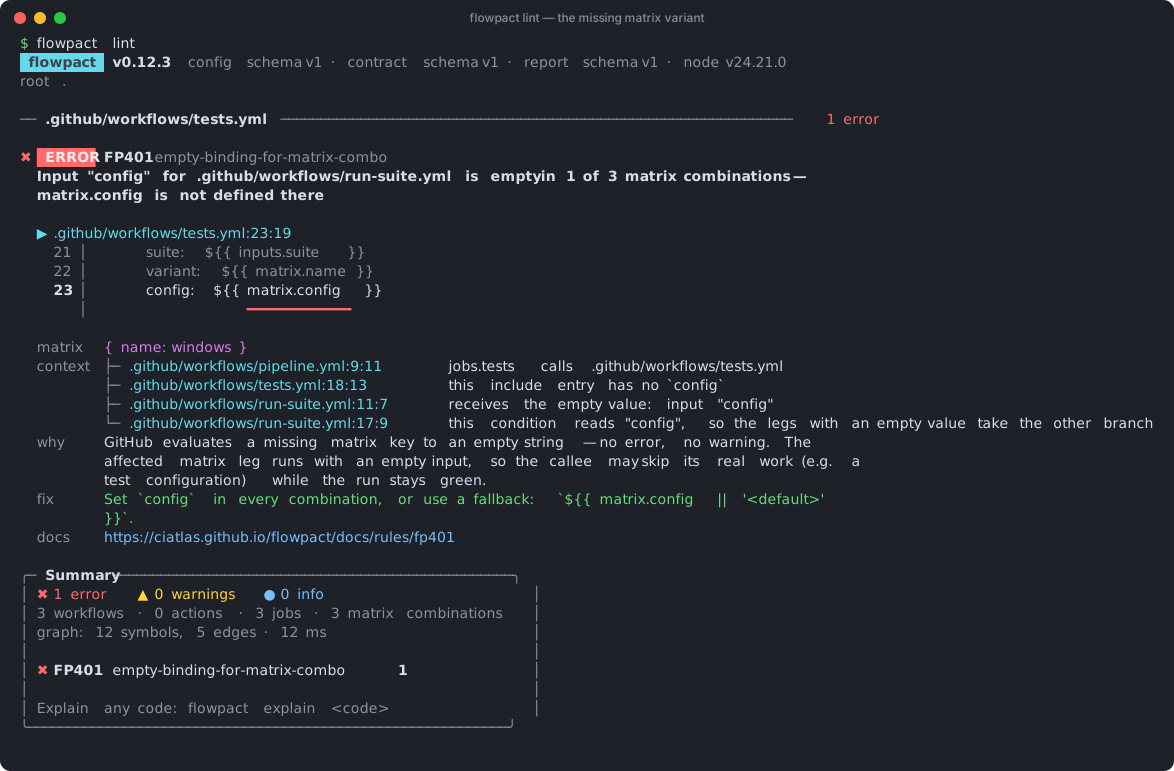
What flowpact does
flowpact parses your workflows and local actions into a data-flow graph — every input, secret, env var, matrix key and output, where it is defined and where it is read, across every level of nesting — and runs rules over it.
Lint
Contracts
flowpact check fails on drift and marks breaking interface changes.Trace and graph
Impact mode
GitHub Action
Configure
Quick start
npx flowpact lint       # find problems
npx flowpact generate   # lock the interfaces in .github/flowpact/
npx flowpact check      # lint + fail when the workflows no longer match the contracts
Run it at the root of a repository. See Getting started for installation options and how to read the output.