Change shared workflows and actions without breaking their callers.
flowpact grades every release of a reusable workflow or action against what its callers use, and checks every call against the version it targets.
npx flowpact lintNo config · Runs nothing from your YAML · No telemetry · MIT
Two breaks that raise no error where they happen
Callers pin a tag such as @v1, so a change that breaks them fails in their runs, not in yours.
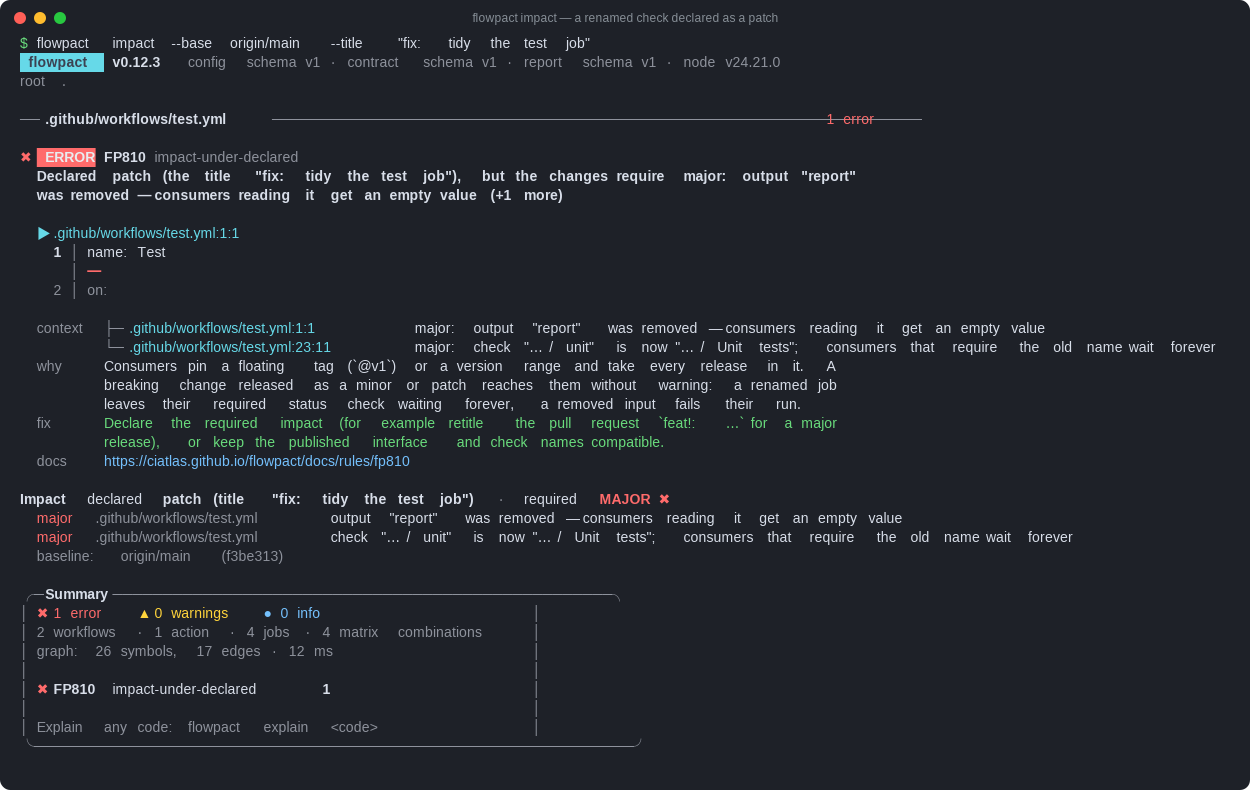
You publish: a job renamed in a fix: pull request
Callers' branch protection now waits forever for the old check name, and a release tool ships the rename to everyone on @v1 as a patch. Impact mode fails the pull request: it needs a major release.
You call: a tag that moves to a release without an input you pass
actions/setup-node@v6 moved to 6.1.0, which dropped always-auth: a step that passes it only gets a warning in a log. flowpact grades the move against your calls.
$ flowpact remotes update --dry-run --fail-on breaks
  changed actions/setup-node@v6: 2028fbc → 2499707, breaks 1 of 2 calls
    input "always-auth" was removed — steps that pass it get a warning, and their value is ignored
    breaks .github/workflows/release.yml:7 jobs.publish step #2
      FP102 actions/setup-node@v6 has no input "always-auth"
1 other call fitsWhen you publish them: every release graded
Each pull request is graded major, minor, patch or none, and fails when its title declares less.
Contracts make every interface change a diff in review
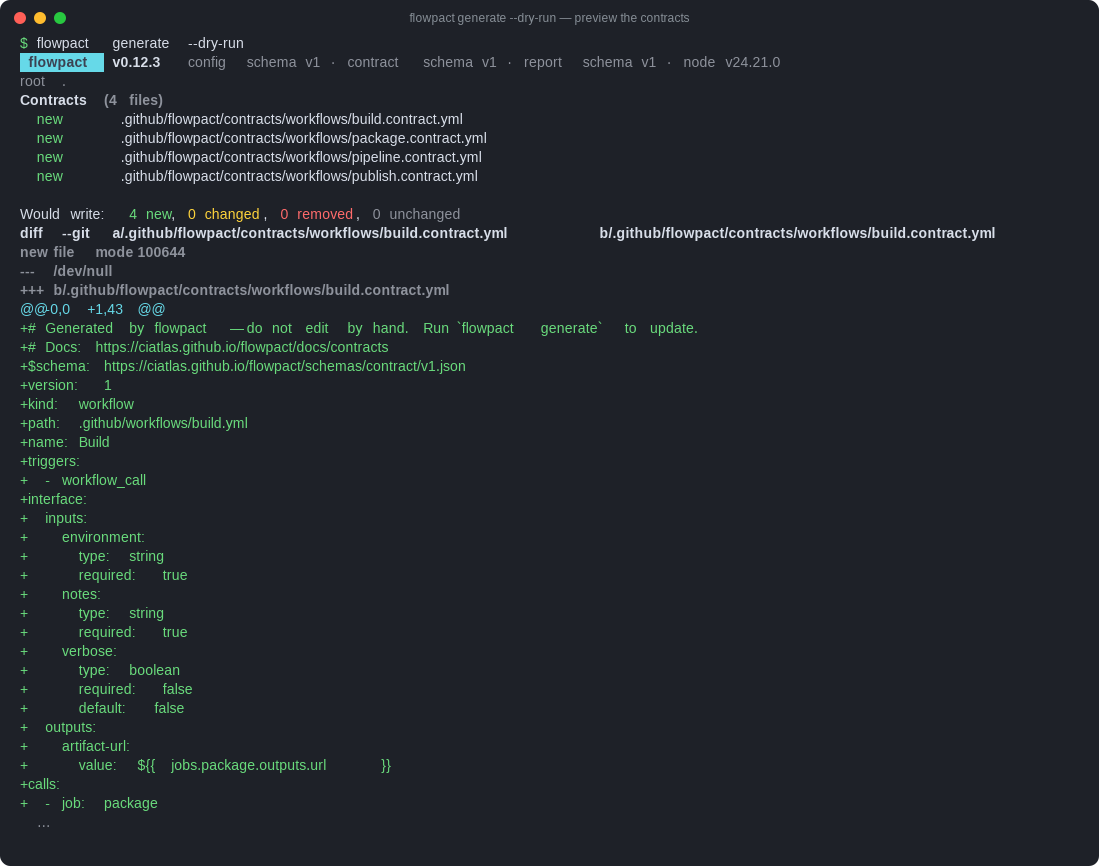
Impact mode grades what callers can see
| Change to a published workflow or action | Release |
|---|---|
| A job renamed, so its check name is gone | major |
| An output removed | major |
| A new required input | major |
| Broader permissions | major |
| A runner label callers may not have | major |
| An optional input added | minor |
steps:
  - uses: actions/checkout@v7
  - uses: ciatlas/flowpact@v0.29
    with:
      mode: check    # compare with the contracts
impact: auto # grade the releaseWhen you call them: every call checked against its version
Record the interfaces you call once with flowpact remotes update, commit the lockfile, and every call is checked against them, offline.
A call that no longer fits
✖  ERROR  FP102 unknown-input
  actions/setup-node@v6 has no input "always-auth"

  ▶ .github/workflows/release.yml:10:11
    10 │           always-auth: true
       │           ━━━━━━━━━━━
Run remotes update --fail-on breaks on a schedule to hear when a tag moves under you. On a Renovate or Dependabot pull request, the action grades the bump before you merge it.
Remote interfaces, GitHub Enterprise Server and GitHub's actions.lock →
Inside your repository: what a green run hides
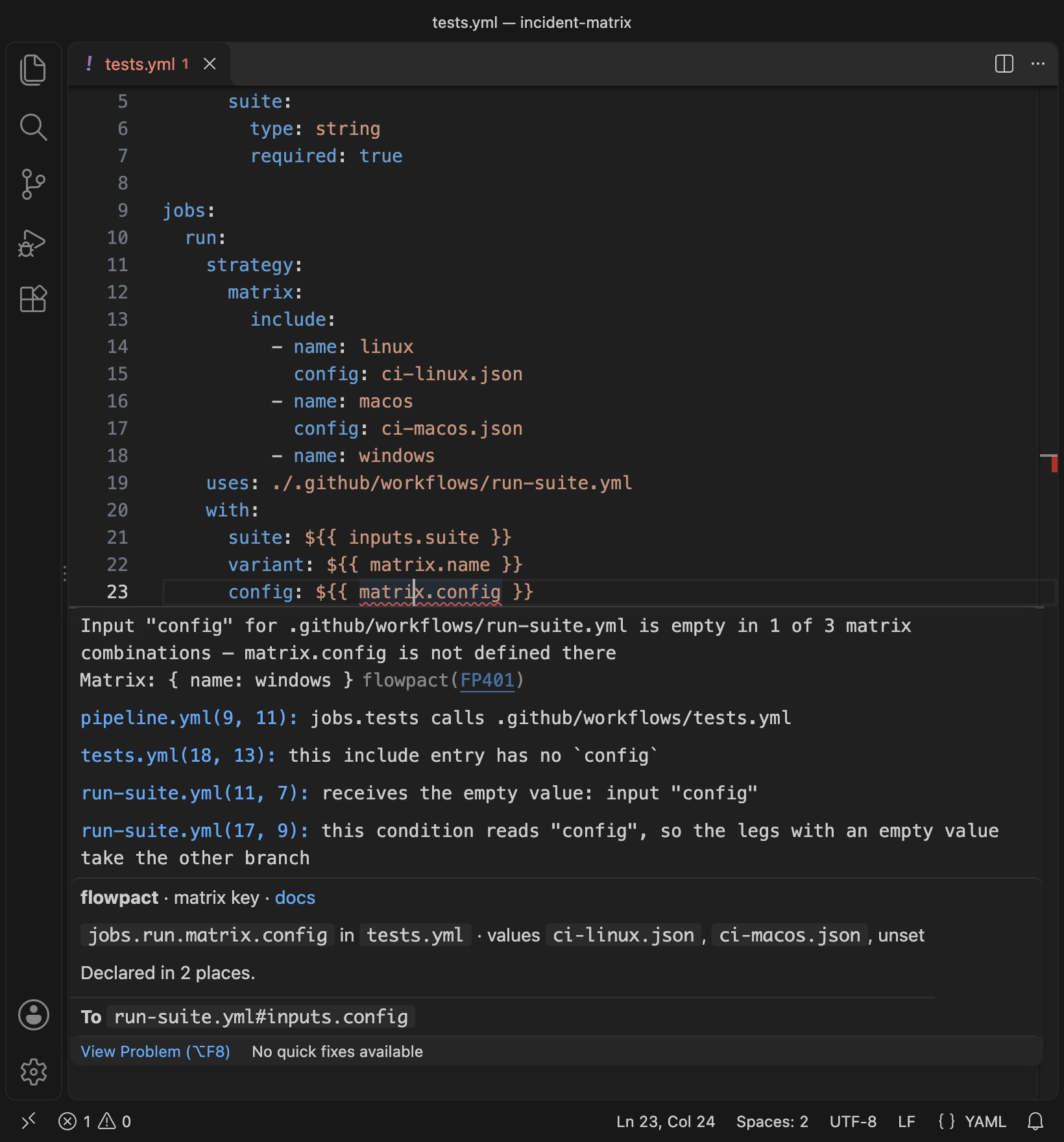
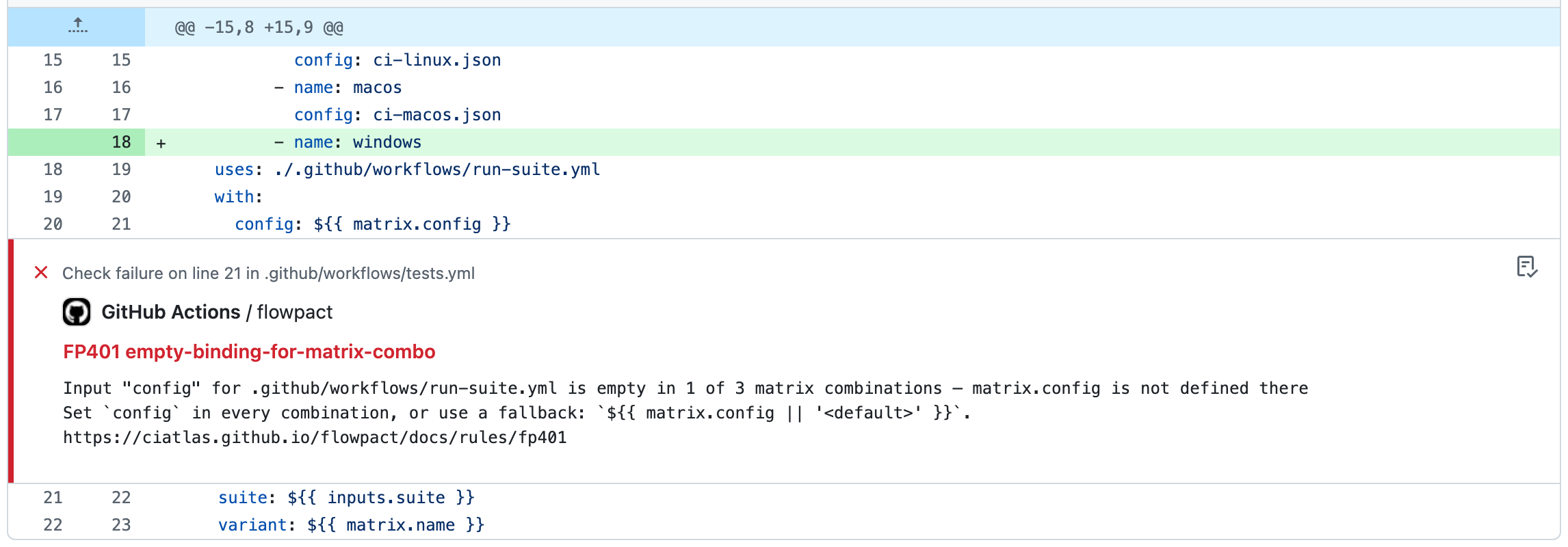
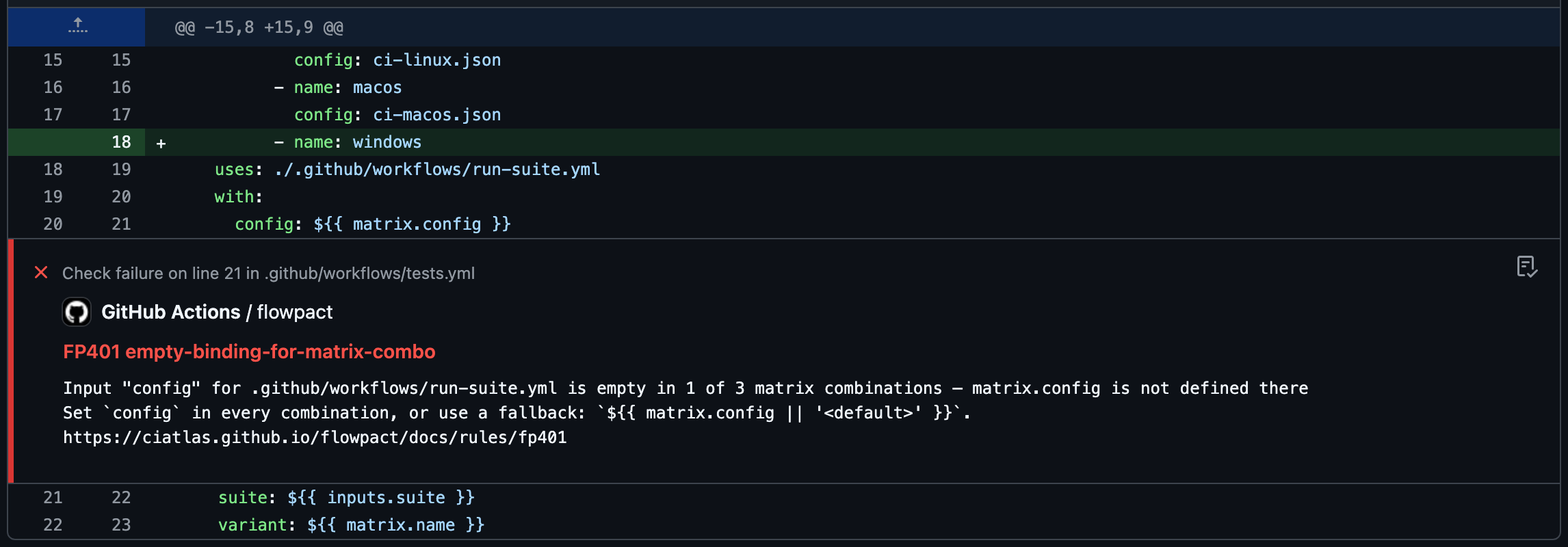
GitHub Actions turns these into empty values, with no error and a green run. flowpact follows every value across workflows, actions and matrix combinations.
An include entry lacks a key, and that combination passes an empty value on. The bug that started flowpact: the windows tests never ran, and every run was green.
An optional input without a default decides an if:, and a caller leaves it out.
Read but never declared, and a caller does not use secrets: inherit. In one large public repository: 31 callers, a token that was always empty.
A step's script writes other outputs but never this one, or an expression reads an output nothing defines.
After actions/checkout with path:, ./.github/actions/… points nowhere.
Every rule, with why it matters, how to fix it and an example → · Side by side with actionlint and GitHub's extension →
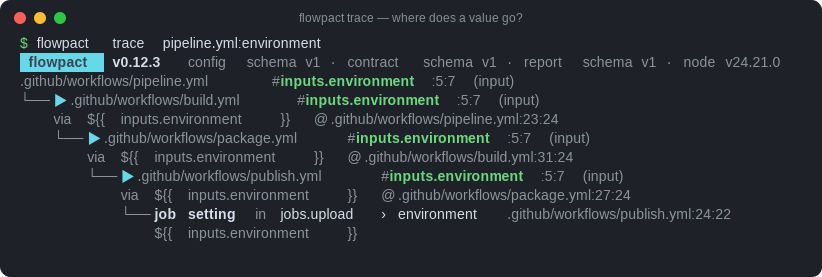
Know exactly what flows between your workflows
Follow any value down to where it is used, or up to where it comes from, across every workflow and action.
In your editor, before you push
The same findings as you type, closed files included. Hover any value to see where it comes from and where it goes; quick fixes, rename and completion work across files.
On every pull request
Use it next to actionlint and zizmor
Each file in depth: syntax, shell scripts, expression types, runner labels, popular actions.
Security: template injection, credentials left in the checkout, risky triggers.
Between workflows, actions and repositories: the interfaces they share, their versions, and where a value arrives empty.
Safe to run on any repository
flowpact runs nothing from your YAML, sends nothing unless you ask it to fetch remote interfaces, and collects no telemetry. Releases are attested and published with provenance.
Security · Threat model · OpenSSF Best Practices · OpenSSF Baseline, level 2
Start where you are
Stop breaking the repositories that use my workflows
Know what a version bump does to my calls
Check calls to other repositories
Find problems in my workflows
See findings while I edit
Run it on every pull request
Look up a finding
Roll it out across my organization
Review flowpact’s security
One command, no config
npx flowpact lintA few standalone workflows with no calls between them? actionlint alone may be enough. flowpact earns its place once workflows call each other, or other repositories call yours.